


Welcome to Connections, our new email-based newsletter. To unsubscribe, click the Unsubscribe button in the email you received. To subscribe, send your email address here.
2025 Issue #4: Linked Articles Only
All articles from the Connections newsletter that have a read more link are included on this page. To request the full newsletter, send your email address here.
Staying Informed: Understanding Medicare's Hospice Eligibility Reviews
At Seasons Hospice, we’re committed to providing compassionate, high-quality care to patients and their families during life’s most tender moments. As part of that commitment, we want to keep our community—families, volunteers, donors, and friends—informed about important updates and procedures that may affect the care we provide. One important part of the care journey involves Medicare’s requirements for ongoing eligibility reviews for hospice services.
Regular Check-Ins to Support Ongoing Care
When a person elects hospice care under Medicare, services are divided into benefit periods: two 90-day periods followed by an unlimited number of 60-day periods. As a patient approaches the end of their second 90-day period—and every 60 days afterward—a hospice physician or nurse practitioner is required to complete a face-to-face visit.
These visits help determine whether the patient’s condition still meets the guidelines for hospice care. They also give our clinical team another opportunity to assess comfort, review needs, and provide reassurance to both patients and families.
What Happens If a Patient Is No Longer Eligible?
In some cases, a patient’s condition may improve, or their needs may change, meaning hospice care is no longer the most appropriate level of support. If that happens, the patient is discharged from hospice and returns to the standard Medicare coverage they had prior to enrolling in hospice.
Importantly, patients can return to hospice at any time if their condition changes and they again meet eligibility requirements. We continue to support these individuals and their families throughout this process.
Compassionate Transitions
Discharge from hospice does not mean an end to care or connection. Medicare requires at least two days’ notice before discharge, and we provide discharge planning to ensure a smooth transition. This includes:
Coordinating future care with physicians or specialists
Offering patient and caregiver education
Providing referrals and emotional support services
Our goal is always to ensure that patients and families feel supported—no matter where they are in their care journey.
Patients’ Rights Matter
Medicare protects every patient’s right to be informed and involved in decisions about their care. If a patient or family disagrees with a decision to end hospice care, they have the right to request a fast, independent review through a Medicare-contracted Quality Improvement Organization (QIO).
Hospice providers are required to give written notice of this right. If this notice is not received, patients or family members are encouraged to request it.
For more information about Medicare rights and protections, you can:
Visit www.medicare.gov/Publications/Pubs/pdf/10112.pdf
Call Medicare at 1-800-MEDICARE (1-800-633-4227)
TTY users: 1-877-486-2048
A Note To Our Community
Whether you are a current family, a past caregiver, a generous donor, or a dedicated volunteer, thank you for walking alongside us in this work. Your trust, support, and compassion make it possible for us to provide dignity, comfort, and peace to every patient we serve.
If you have any questions about hospice care, eligibility, or Medicare processes, please don’t hesitate to reach out to us. We are here to help.
MEET THE STAFF
This year, we’re excited to give you an inside look at the incredible team behind our hospice care. Each issue of Connections will introduce you to different groups within our staff, showcasing the compassionate individuals who make a difference every day. This month, we want to introduce you to our indominable social work team.
The Social Workers of Seasons: A Quiet Role of Reassurance

Who better understands the essential role of a hospice social worker than their close partner in care—the hospice nurse? As Seasons RN Beth explains, “In hospice, nursing and social work collaborate to meet the patient’s end-of-life needs and wishes. Social workers support families when unforeseen challenges arise, providing reassurance, knowledge, and resources as needed.”
At Seasons Hospice, our dedicated social work team includes two full-time admissions social workers, two full-time home care social workers, and one part-time home care social worker. This intentional structure allows team members to focus on their specific areas of care, rather than splitting time across different roles—an advantage that enables more personalized, responsive support.
Each social worker brings a diverse background and specialized training to their work. Their prior experience spans roles such as university instructor, victims’ advocate, behavioral health coordinator, child protection worker, and school district liaison. This breadth of knowledge equips them to provide expert guidance not only to patients and families but also to fellow team members.
Social worker Joann reflects, “We value working in a multidisciplinary team because we all bring different strengths to our work with patients and their loved ones.” Social workers collaborate closely with lead nurses, chaplains, and therapy staff to ensure families receive holistic, compassionate care. From the first moment of admission to ongoing support, they are integral in communicating and reinforcing the hospice philosophy of comfort and quality of life.
In addition to clinical support, social workers offer continued end-of-life education to families and care facilities, including assisted living, memory care, and skilled nursing homes. They are also present to help families navigate the ongoing stresses of daily life and various forms of grief—whether directly related to hospice care or not.
Behind the scenes, they manage the ever-evolving needs of patients while staying current with complex Medicare requirements. They walk alongside patients, families, and colleagues, providing necessary resources along the way. Social worker Jordyn notes, “The role of the social worker is different—we work with families in a subtle, quiet way that is often not seen.”
Though their contributions may not always be visible, the impact of Seasons social workers is deeply felt. Their steady presence, compassionate expertise, and commitment to teamwork bring peace of mind to families during one of life’s most difficult transitions. They are a vital part of the care that defines Seasons Hospice.
DID YOU KNOW?
HOSPICE FACTS & FIGURES
The Alliance for Care at Home complies a wide range of data regarding the delivery of hospice care. The charts below represent just a small portion of the data. We will continue to share more data in future issues of Connections.
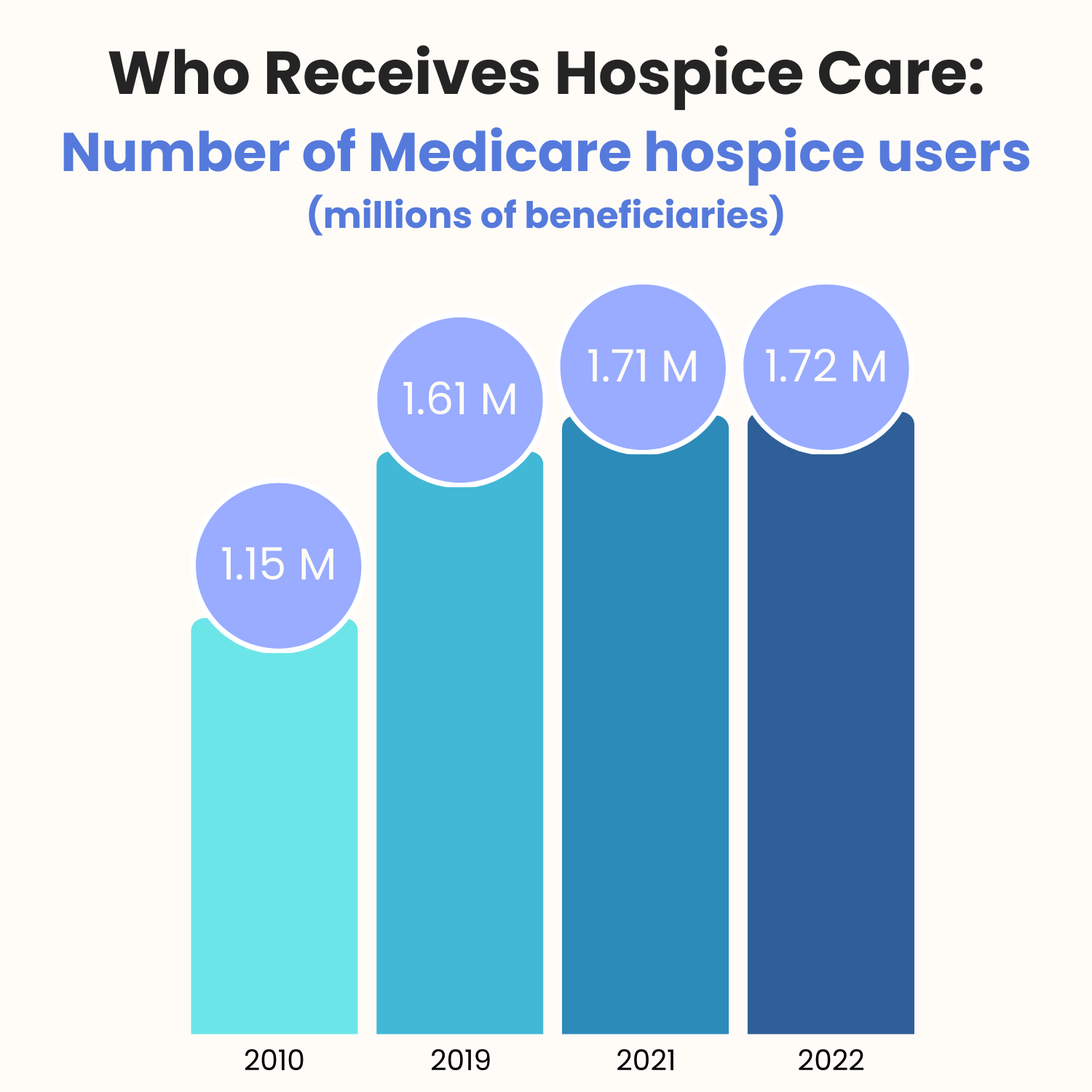
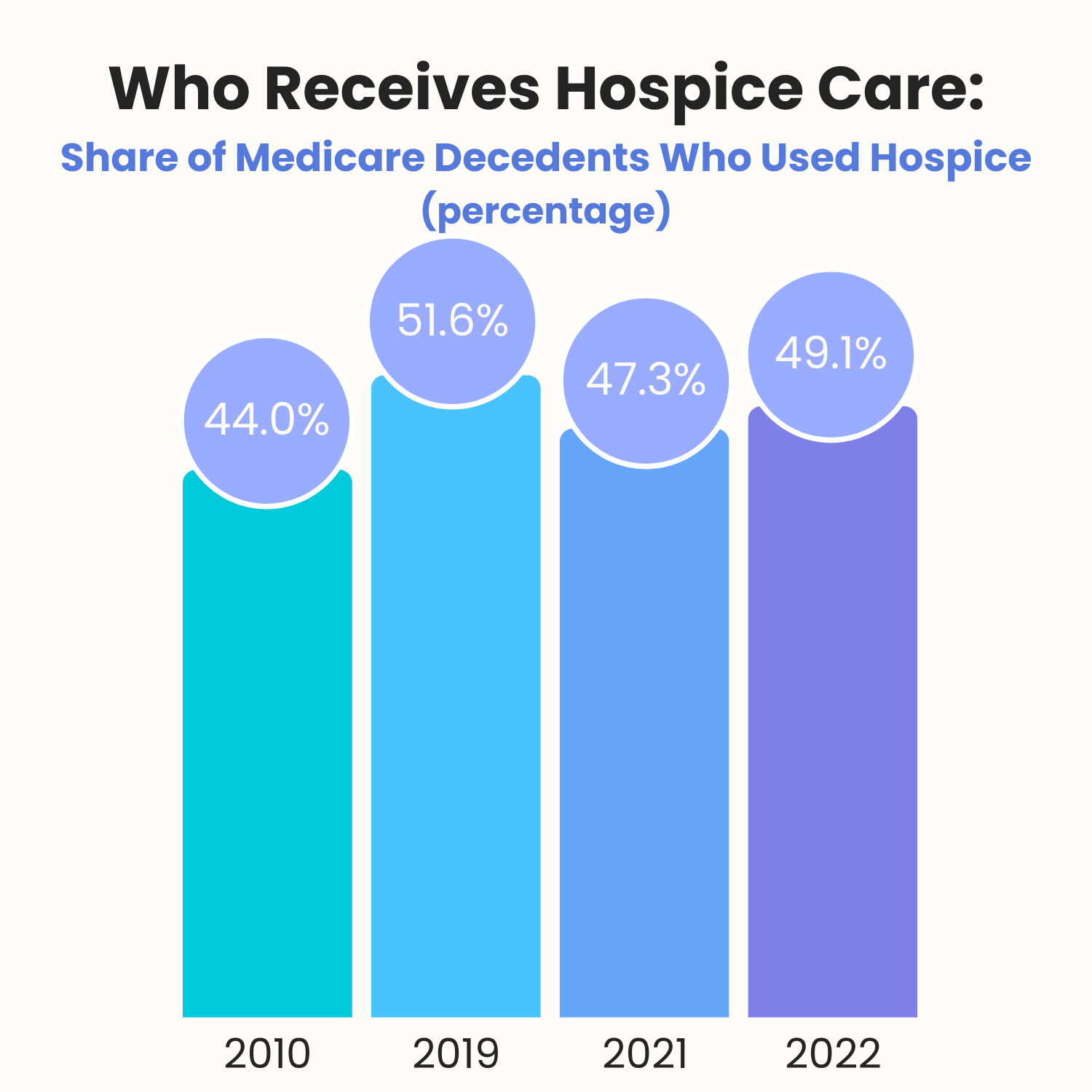
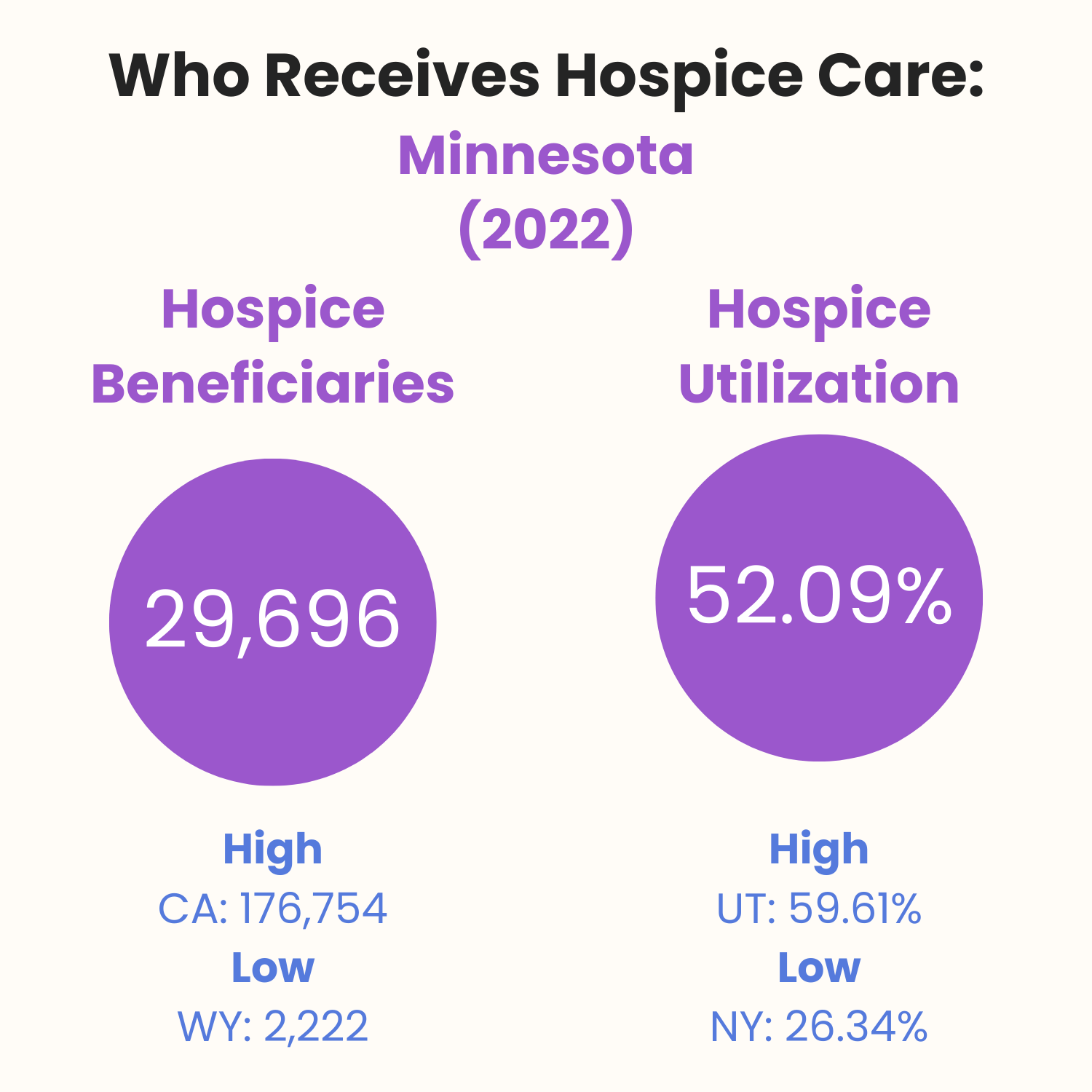
Hospice utilization = Percentage of Medicare users who enrolled in Hospice
Source: 2024 Edition: Hospice Facts and Figures. Alexandria, VA: National Alliance for Care at Home.
NOTES FOR THE JOURNEY:
RESOURCES FOR THOSE NAVIGATING HOSPICE
We all need some self-care to see us through the journey of hospice and beyond. Here is a book recommendation from the daughter of a former patient and an author recommendation from our social workers.
BOOK
The In-Between: Unforgettable Encounters During Life’s Final Moments by Hadley Vlahos, RN
A New York Times bestseller, this heartrending memoir shows how caring for others can transform a life while also offering wisdom and comfort for those dealing with loss and providing inspiration for how to live now.
author
Alan D. Wolfelt, PhD
Dr. Wolfelt is a noted author, educator, and grief counselor. He is the author of more than fifty bestselling book on grief and loss, including Loving From the Outside in, Mourning From the Inside Out; Understanding Your Grief; The Journey Through Grief; Companioning the Bereaved: A Soulful Guide for Caregivers; Healing a Spouse's Grieving Heart; Companioning the Grieving Child; Healing a Parent's Grieving Heart; and Creating Meaningful Funeral Ceremonies.

